Food fit for the future
Food is a basic necessity. It's also a livelihood, a cultural expression, and one of the biggest drivers of environmental impact on the planet.
Our mission is to improve the health of people and the planet through complete and convenient nutrition.
At Huel, that means developing products with nutrition and environmental impact built in, not bolted on.
Our food system
The food system is responsible for over a quarter of all global greenhouse gas emissions (Crippa, M., Solazzo, E., Guizzardi, D. et al., 2021). Animal-based foods account for more than half of those, while delivering just 18% of global calorie intake (Poore & Nemecek, 2018). Shifting towards more plant-rich diets is one of the most widely recognised ways to reduce them (Gibbs & Cappuccio, 2022).
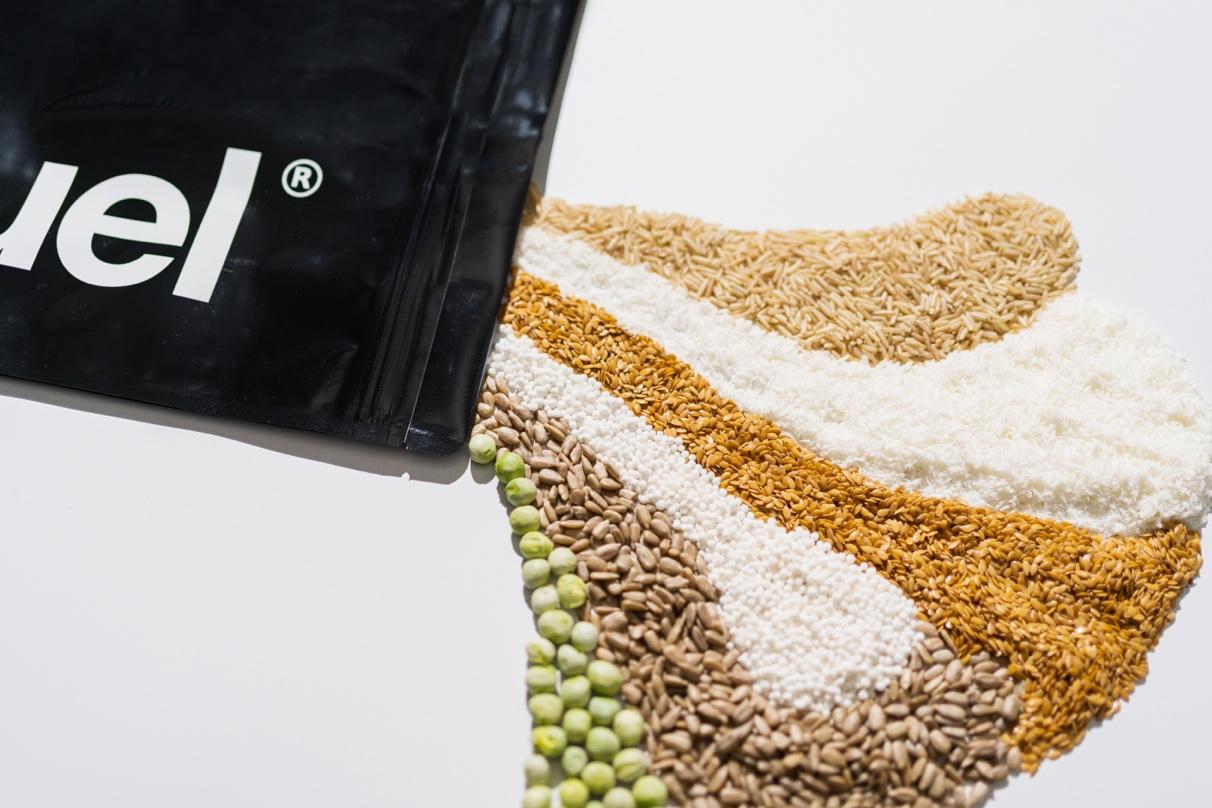
Every Huel product is plant-based. Our core ingredients, peas, oats, and flax, are generally associated with a lower environmental impact than animal-derived alternatives (Poore & Nemecek, 2018).
Research by WWF (One Planet Plate, 2021) suggests that keeping food-related emissions in line with a 1.5°C pathway means around 0.5 kg CO₂e for lunch and dinner, and 0.4 kg CO₂e for breakfast.
We use those figures to guide decisions throughout our product development process.
Our ingredients
Carbon is only part of the picture, environmental impact extends beyond emissions to land use, water, and biodiversity.
We're investing in regenerative agriculture through both sourcing decisions and field-scale trials in the UK and Canada. The trials focus on soil health, biodiversity, and reducing reliance on synthetic fertilisers. They're helping us understand what works at scale, and how to apply those practices across more of our ingredient sourcing over time.
In the UK, we source oats from Gentle Farm, where low-till farming and soil-focused management practices have been in place for over a decade. We're using those learnings to inform our approach to other key ingredients.
Suppliers with shared values
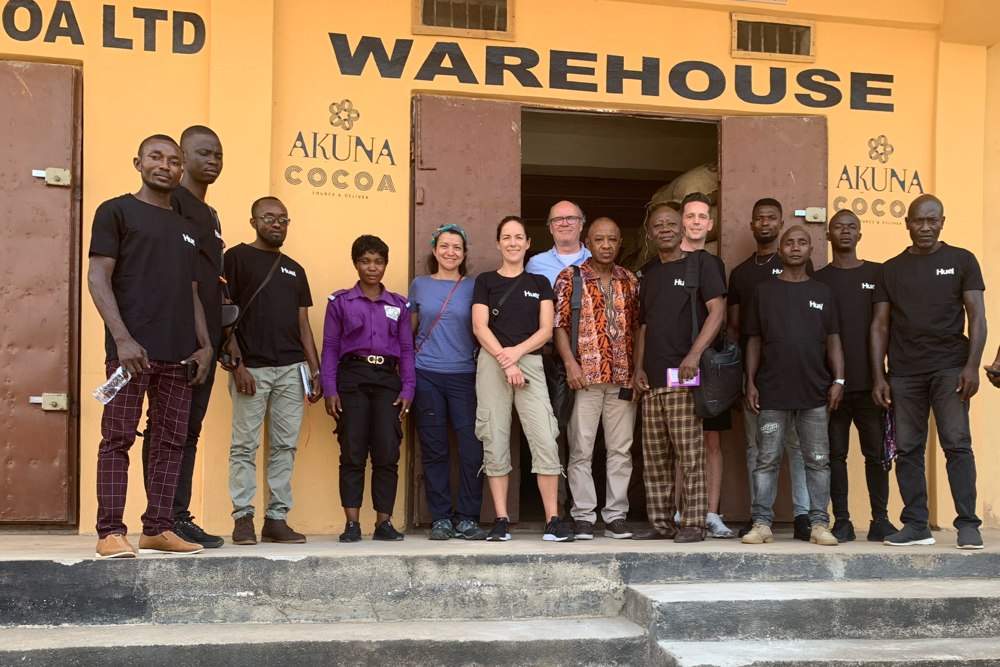
We aim to work with suppliers who meet our ethical standards. We assess risk across our value chain and evaluate supplier performance using recognised tools, including the Supplier Ethical Data Exchange (Sedex).
All suppliers must hold an independently verified ethical audit, SMETA or equivalent, and comply with the Huel Supplier Code of Conduct. Where suppliers operate in higher-risk regions or are linked to key human rights concerns, we increase engagement and work with them directly on improvements. Our focus areas include fair wages, child labour, forced labour, and safe working conditions. We monitor performance through ongoing audits and review.
For cocoa, we go further. We source through Tony’s Open Chain.
Our carbon footprint
Net Zero means achieving a balance between the greenhouse gases emitted into the atmosphere and those removed. Reaching that balance globally by 2050 would halt the warming caused by human activity and help avoid the most severe impacts of climate change.
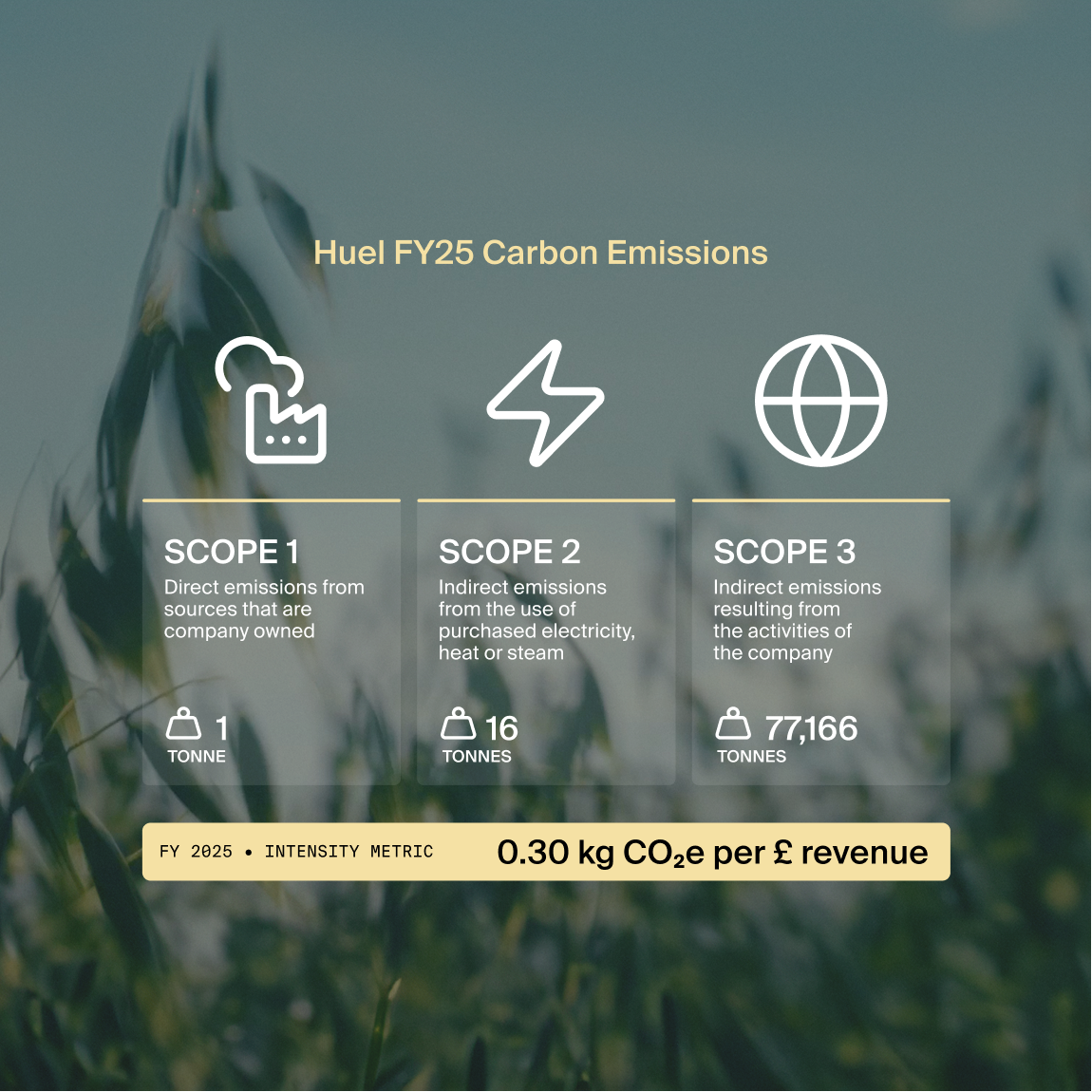
We measure our Scope 1, 2, and 3 emissions annually, at company and product level, using the Altruistiq carbon accounting platform. Since FY22, our emissions have grown more slowly than our revenue, reducing our carbon intensity from 0.33 to 0.30 kg CO2e per £ revenue.
Our data is independently assured by Bureau Veritas under ISO 14064-3:2019.
The figures shared are market based. See full breakdown & methodology here.
Our packaging
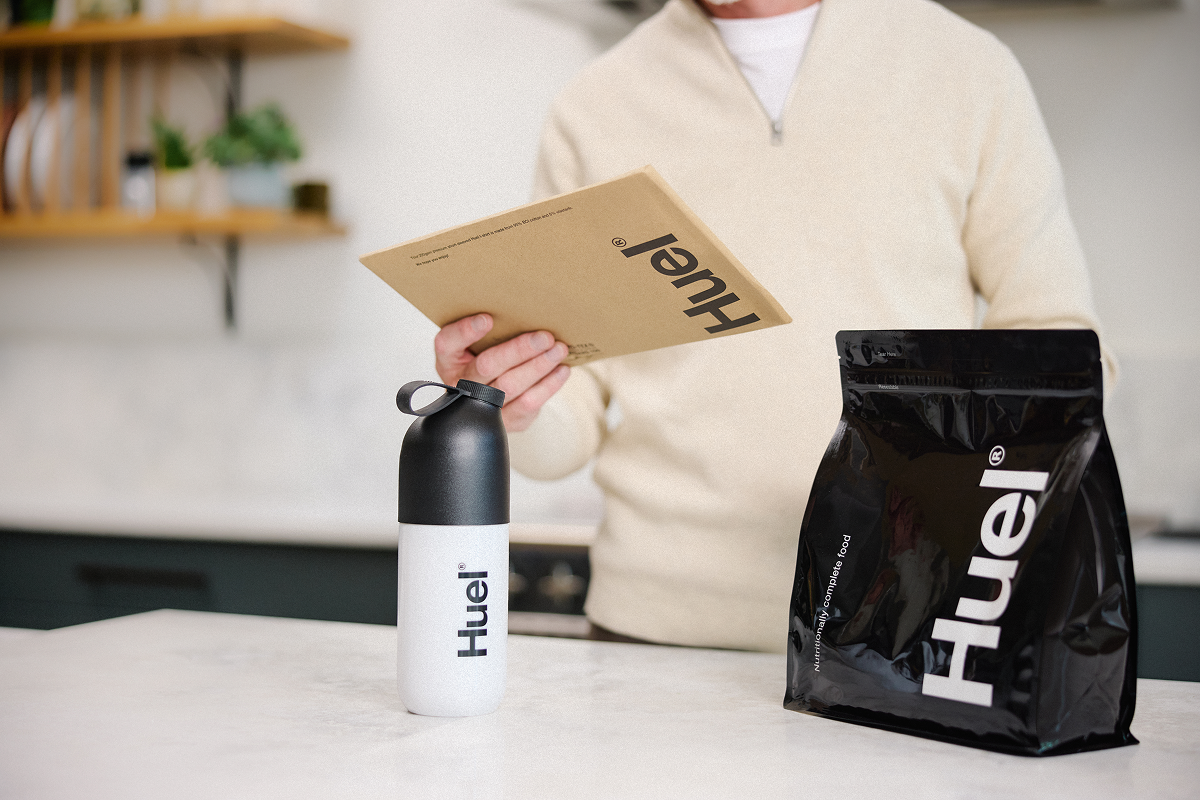
Our packaging has to balance several things at once: protecting the product, maintaining quality, extending shelf life, and keeping material use and carbon impact as low as we can, sometimes in tension with each other.
Our bottles are made from 51% recycled plastic and are recyclable. Our cans use 62% recycled aluminium and are widely recyclable where facilities exist.
Our pouches are lightweight, multi-serve, and carry a 12-month shelf life from production. They're not currently recyclable. We know that's a gap, and we're working on it, testing solutions that improve recyclability without trading off shelf life or food waste reduction.
Reducing food waste
If food waste were a country, it would be the third-largest emitter of greenhouse gases in the world, behind only China and the United States (Food Wastage Footprint: Impacts on Natural Resources, FAO, 2013).
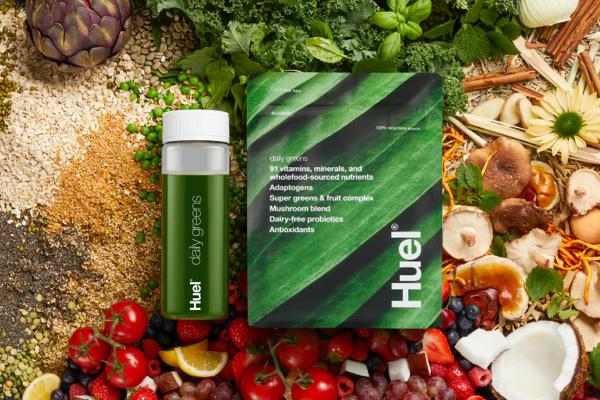
Our products are built to minimise food waste. Shelf lives are long: Huel Powder lasts 12 months from production unopened, and up to 6 months once opened and stored correctly. Flexible serving sizes mean customers prepare only what they need.
Some of our ingredients are by-products of other food processes. Pea protein, for example, is a co-product of processes such as vermicelli noodle production, making use of resources that might otherwise go to waste.
We also donate products to food banks, reducing waste and keeping food out of landfill.
Giving back
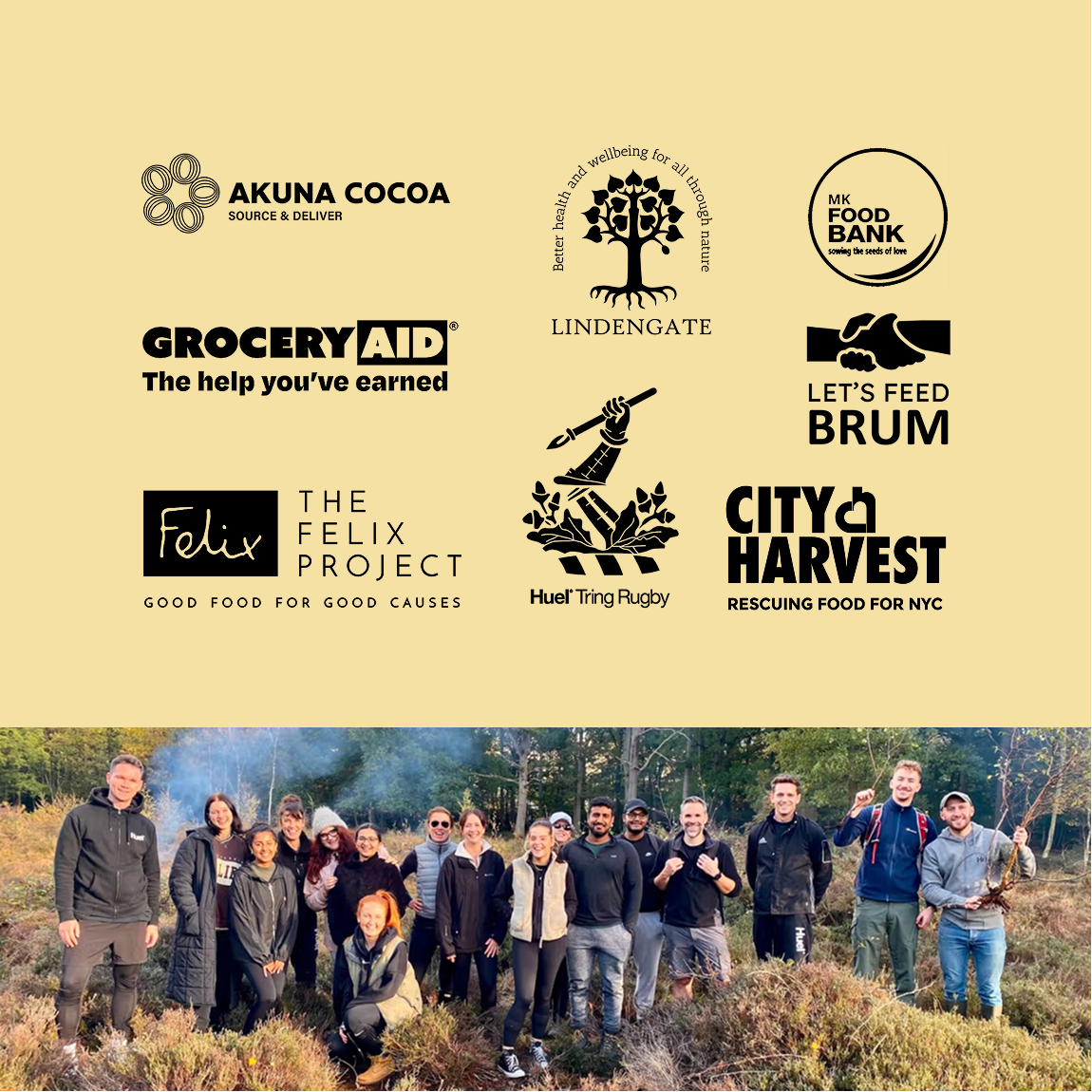
In 2020, we launched our Community Programme, committing to allocate 1% of our annual profits to charities and organisations aligned with our mission. We also provide all employees with one paid day each year for volunteering.
We have a dedicated charity partner in each location where our teams are based: The Felix Project in London, City Harvest in New York, Lindengate in Buckinghamshire, MK Food Bank in Milton Keynes, and Let's Feed Brum in Birmingham.
We also support GroceryAid, which helps people working in the grocery industry who have fallen on hard times, and sponsor Tring Rugby Club, supporting the local community around our HQ.
Further afield, we provide ongoing financial support to Elba Hope Foundation's Project Trust in Sierra Leone, helping to fund programmes that aim to improve the livelihoods of cocoa farmers while supporting forest protection and regeneration.
Impact Materiality Assessment
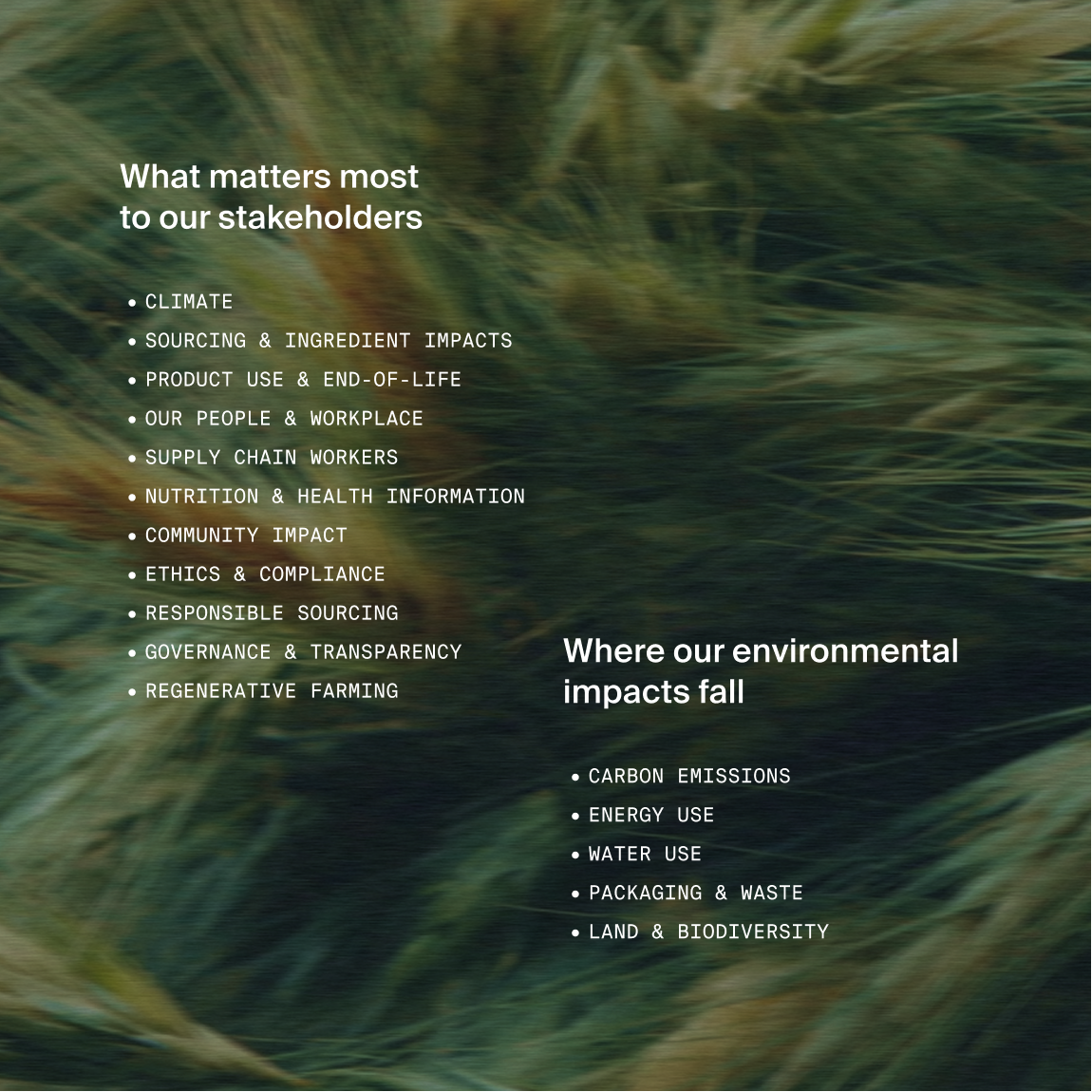
Over 2025 and 2026, we completed two assessments to identify the issues that matter most across our value chain, for people, the planet, and our business.
Our Impact Materiality Assessment identified 11 priority topics across environmental, social, and governance areas, using an impact-first approach that engaged workers, suppliers, customers, and investors.
These topics cover both the positive impacts we're proud of and the negative impacts we're working to reduce.
Our Environmental Assessment mapped impacts in detail across our full value chain, from raw material sourcing through to end-of-life, using recognised external frameworks including the Science Based Targets Network (SBTN) and WWF Risk Filter.